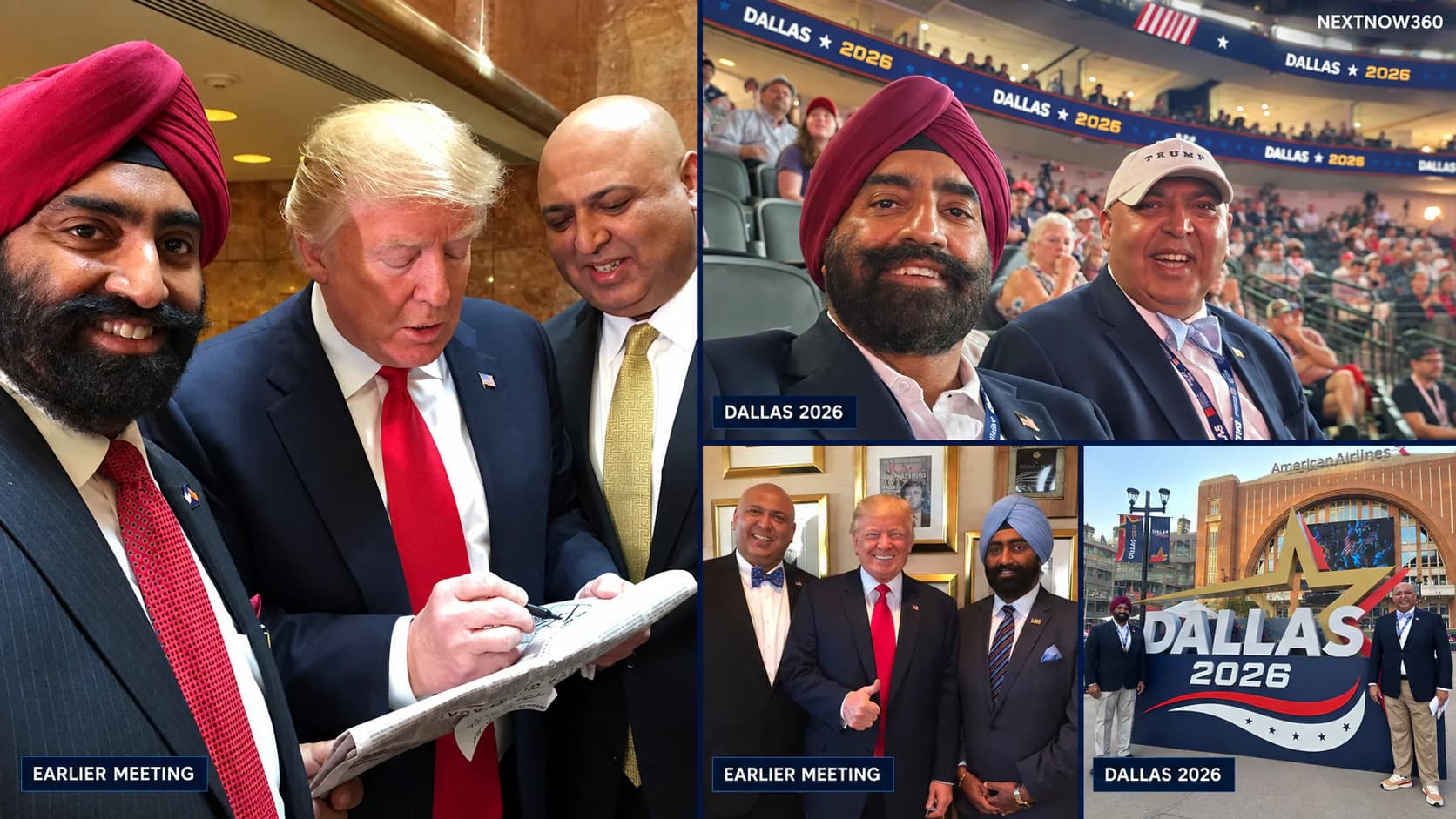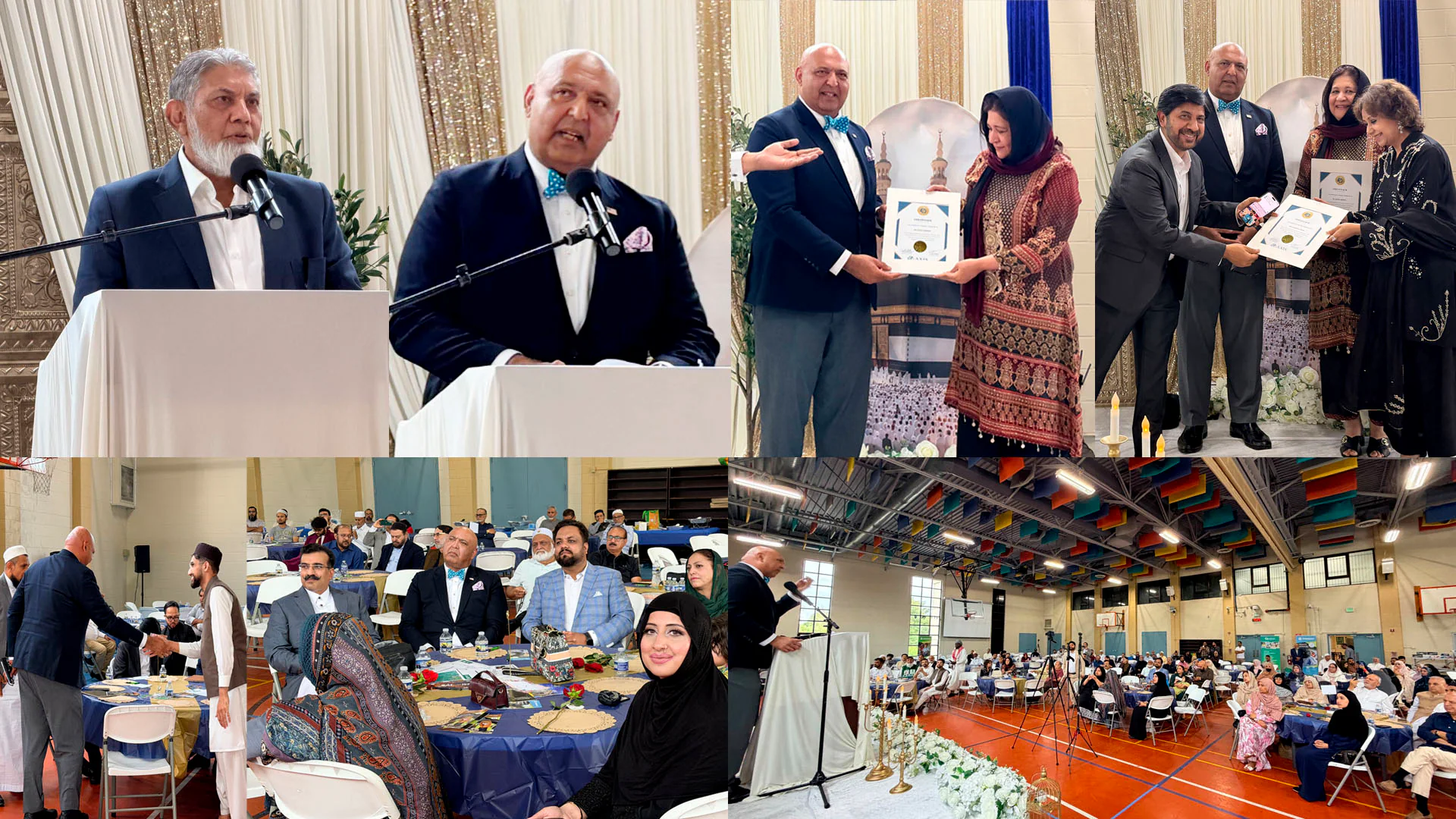
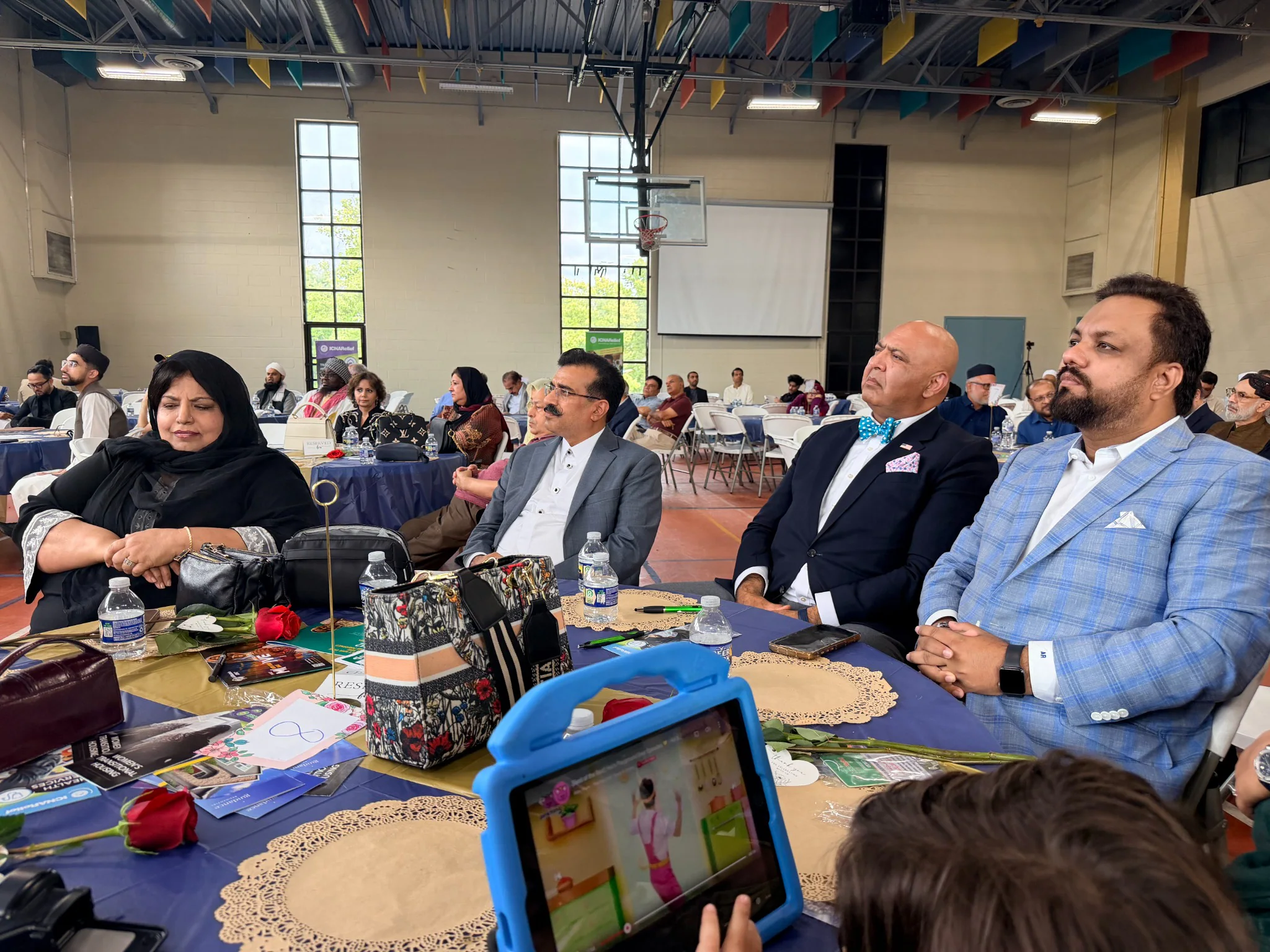
BALTIMORE, Maryland — A gathering centered on the life and teachings of Prophet Muhammad developed into a broader conversation about faith, conduct and the challenges facing Muslim communities when the International Seerat-un-Nabi Conference 2026 brought families, scholars and community leaders together at the Islamic Society of Baltimore.
The conference drew attendees from Maryland, Washington, D.C., and surrounding areas, with a particularly visible presence of families, women and children.
Muslims of America played a prominent role as the event’s Grand Sponsor. The organization’s president, Aisha Khan, attended the conference, while Dr. Sajid Tarar appeared as a special guest speaker and delivered one of the gathering’s most pointed interventions.
Serving the Humanity was also represented at the event by its chairman, Mian Irfan Yaqub, along with Ahmed Rana, Salman Bhatti and other board members and representatives.
Professor Dr. Javed Iqbal and Professor Dr. Sheikh Muhammad Makki delivered keynote addresses, while Idrissou Adam, Chaudhry Abdul Jalil, Tariq Mahmood Jami, Sheikh Ahfaz Ahmed and Hafiz Hamza Irfan were among the other speakers and participants featured during the program.
But one of the conference’s defining moments came when Tarar shifted the conversation away from ceremony and toward a much more uncomfortable question.
“Why Are We Not Understanding Islam?”
Speaking as a special guest and representing Muslims of America, Tarar said Seerat-un-Nabi should mean more than recalling events from the Prophet Muhammad’s life. It should also involve understanding his character, teachings and way of life — and asking whether those principles are visible in Muslim conduct today.
Describing himself as “a student of Islam,” Tarar asked:
What are Muslims doing to Muslims? Why are we not understanding Islam? Why are we becoming trapped in rituals instead of understanding the philosophy and spirit of Islam?
He pointed to the meaning embedded in the everyday Muslim greeting Assalamu alaikum — peace be upon you — and questioned why conflict, division and suffering remain so persistent when peace sits at the heart of the faith’s daily language.
Tarar also challenged what he described as a tendency among Muslims to scrutinize one another’s faith rather than focus on their own character and relationship with God.
“My relationship with God is my relationship with God. Your relationship with God is your relationship with God,” he said, urging Muslims to spend less time judging one another’s faith and more time reflecting Islamic principles through their own conduct.
His remarks were brief, but the questions he raised became an important thread in the discussion that followed.
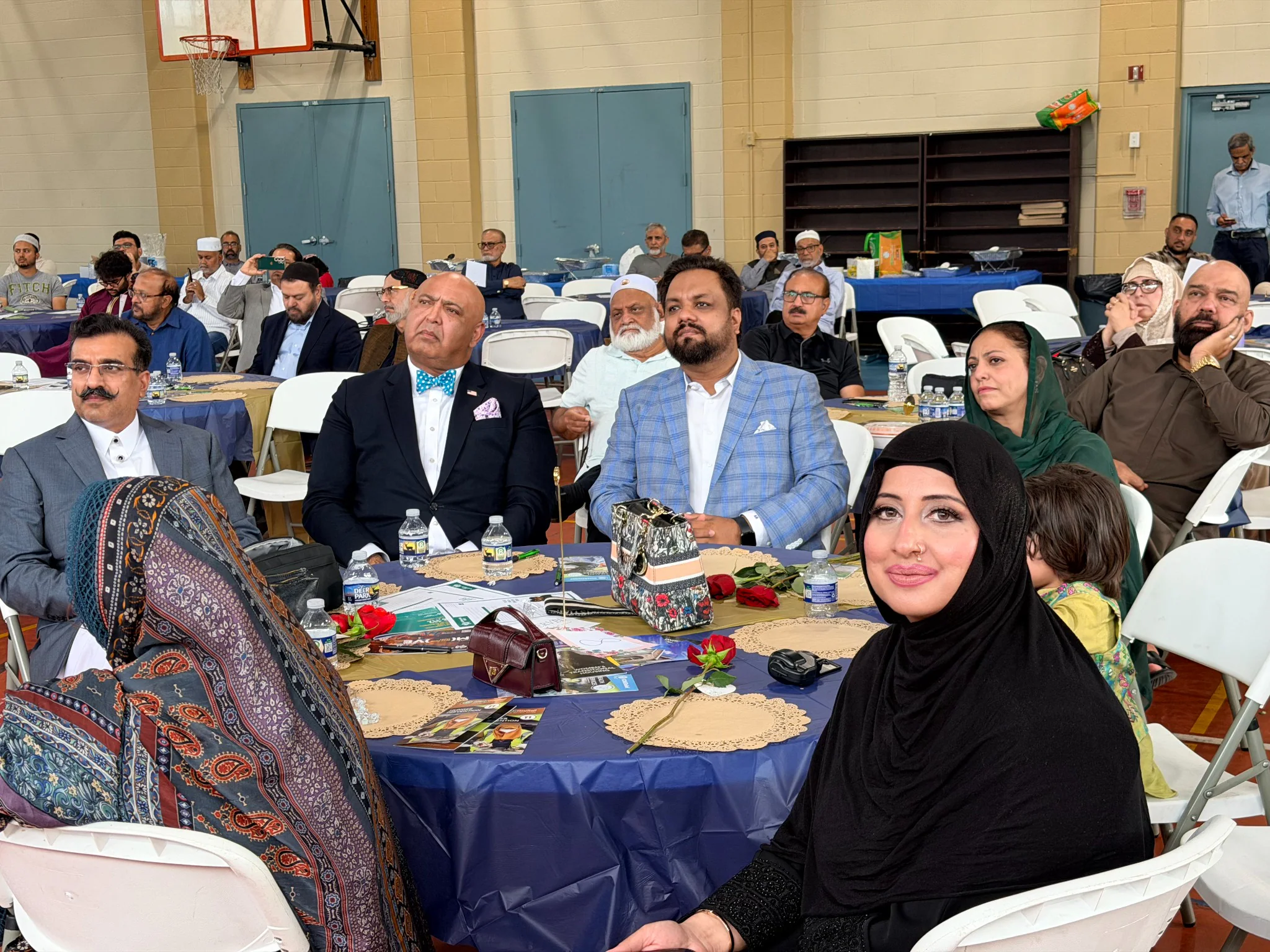
Javed Iqbal Responds: A Name Alone Is Not Enough
When Professor Dr. Javed Iqbal later took the stage, he directly acknowledged Tarar’s question, calling it an important one.
If Muslims possess a powerful moral and spiritual framework, he asked, why do poverty, division and other serious problems continue to affect Muslim societies?
Iqbal answered with a simple story.
He spoke of a man in a village known to everyone as “Basheer Thanedar” — Basheer the police chief. Villagers treated the title seriously until someone eventually asked which police station he actually commanded.
None.
His mother had simply called him “Thanedar” affectionately.
Iqbal used the story to make a larger point: a title does not automatically give someone the qualities, authority or responsibilities associated with it.
The same, he argued, applies to religious identity.
Calling oneself Muslim is not enough if that identity is not reflected in behavior, attitude and action.
For Iqbal, the problem was therefore not simply whether Muslims possessed guidance, but whether that guidance was being translated into lived conduct.
It was a direct response to the question Tarar had placed before the room.
Taking Seerat Beyond the Lecture Hall
Iqbal went on to argue that the example of Prophet Muhammad offers lessons extending far beyond ritual observance, touching leadership, conflict resolution, family relationships, social behavior and the upbringing of children.
A significant portion of his address focused on parenting and early childhood formation.
His central argument was that long-term social change does not begin only with adults already occupying positions of authority. It begins much earlier, in families and homes where values, habits and moral boundaries are first formed.
With women and children making up a significant part of the audience, that portion of his address carried particular relevance inside the hall.
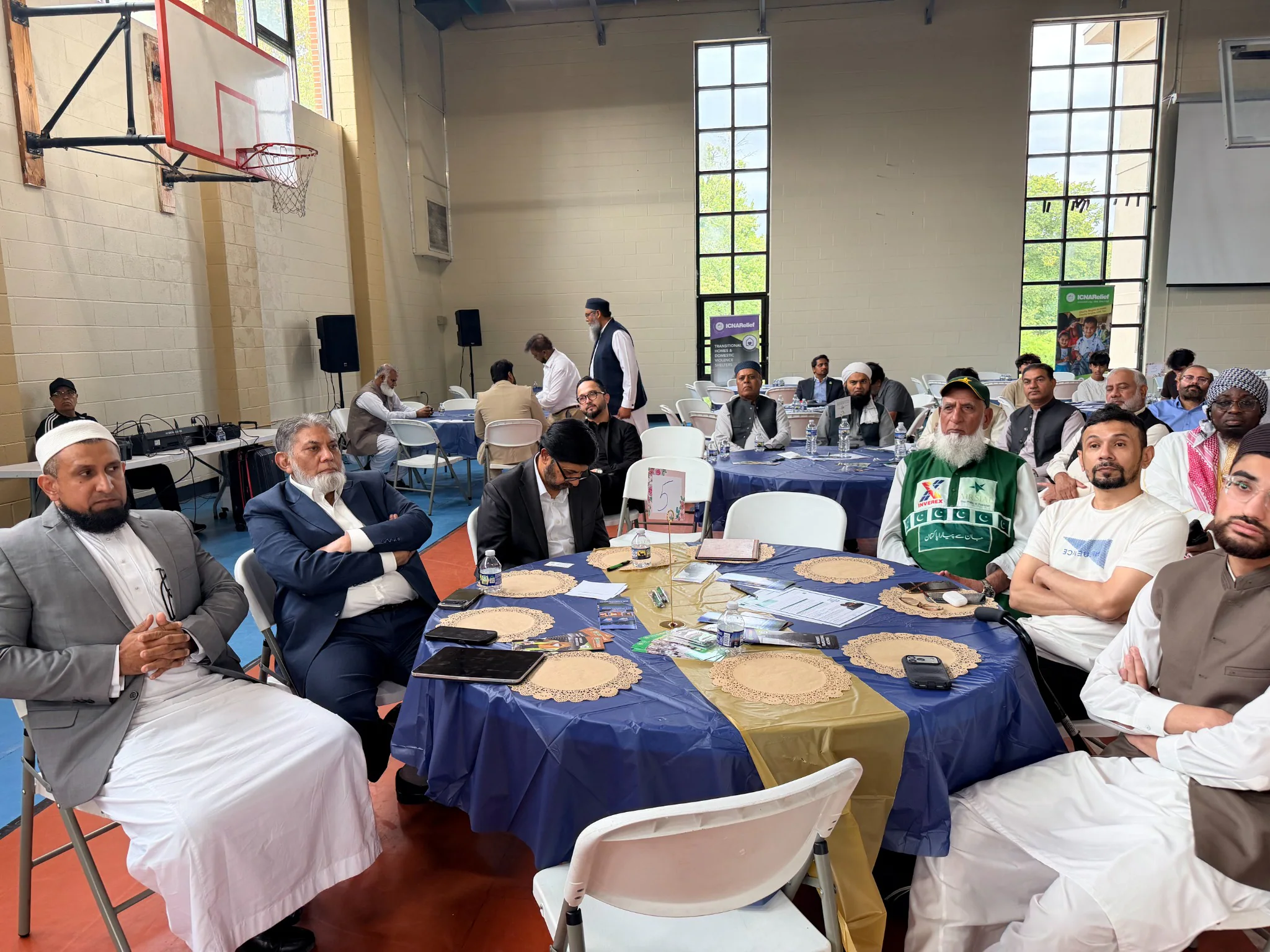
Tarar Praises the Participation of Women and Children
Speaking to media as he left the event, Tarar returned to the conference’s broader community value.
He said bringing together Muslims from Washington, D.C., Maryland and the surrounding region to learn about the Prophet’s life, character and traditions was a positive development — but singled out the participation of women and children as especially encouraging.
Tarar also praised Iqbal’s address, describing him as a scholar and motivational speaker whose work he personally follows and respects.
He said events of this kind should not remain simply ceremonial religious gatherings, but should help families and younger generations think about how Islamic principles apply to everyday life.
For Tarar, the strong participation of women and children was one of the conference’s most meaningful outcomes.
Prayers for Communities Facing Tragedy
The gathering also included prayers for people affected by tragedy and conflict in different parts of the Muslim world.
During his remarks and later in conversation with media, Tarar asked attendees to remember victims of a recent tragedy in Pakistan, as well as people suffering in Palestine, Yemen and other affected communities.
His comments placed the local Baltimore gathering within a wider sense of responsibility toward Muslims experiencing war, violence and hardship elsewhere.
Muslims of America Takes a Leading Role
Muslims of America was not simply one of several organizations represented at the conference. As Grand Sponsor, it played a prominent supporting role in the event.
The presence of President Aisha Khan, together with Tarar’s participation as a special guest speaker, gave the organization a visible place throughout the gathering.
That role also reflected a broader effort to bring different sections of the Muslim community together around religious education, civic connection and family participation.
Serving the Humanity added another community-service dimension to the conference. Chairman Mian Irfan Yaqub, Ahmed Rana, Salman Bhatti and other representatives took part alongside a wider group of nonprofit and community organizations.
The Conference Ended. The Question Remained.
By the time the International Seerat-un-Nabi Conference 2026 came to a close and families began leaving the hall, the central question raised earlier by Tarar had not disappeared:
If Islam speaks of peace, character and responsibility, how clearly are those values being reflected in Muslim collective life?
Iqbal’s response was closely connected to that question.
Religious identity, he argued, gains meaning through conduct.
In the end, one of the conference’s strongest exchanges emerged not from a long theological debate, but from a question and an answer.
Tarar asked:
Why are we not understanding Islam?
And Iqbal’s message, in essence, was equally direct:
Calling ourselves Muslim is not enough. Islam has to be visible in the way we live.