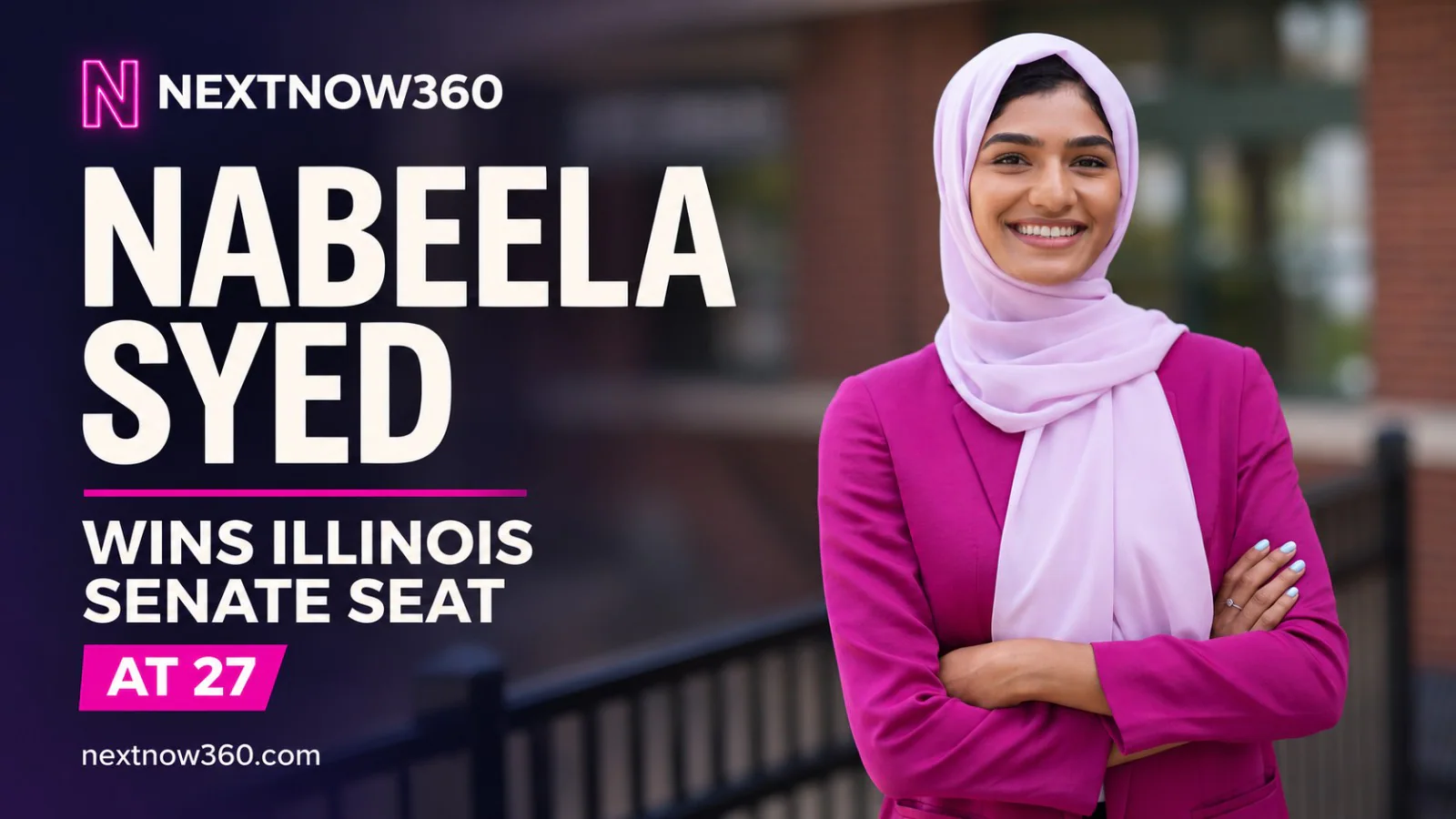
Nabeela Syed’s victory in Illinois Senate District 26 is both a political milestone and a test of what comes after symbolic firsts. Four years after becoming the youngest woman elected to the Illinois General Assembly, the 27-year-old Democrat defeated Republican state Sen. Darby Hills in one of the state’s most expensive legislative contests.
Syed won about 57% of the vote on November 3, according to WBEZ and the Daily Herald. The district covers parts of Cook, Lake, McHenry and Kane counties. Syed is senator-elect; she has not yet taken office, and the result remains subject to the normal certification process.
Her first election, in 2022, drew national attention because of her age, Muslim faith, hijab and family background. Her latest campaign placed those facts alongside a more conventional political question: whether a young incumbent with a developing legislative record could persuade suburban voters to promote her to the Senate.
From Palatine to the Illinois House
Syed was born and raised in Palatine after her parents moved to Illinois from Hyderabad, India. She attended local public schools, stayed involved with her mosque and studied political science and business administration at the University of California, Berkeley, according to her official biography.
In a 2022 interview with Cosmopolitan, Syed said she had initially imagined working on someone else’s campaign. Encouragement from a friend and her mother helped persuade her to run herself. She defeated Republican Chris Bos in a suburban House district previously held by the GOP and began serving in January 2023.
Syed said she knocked on more than 20,000 doors during that first campaign. That ground operation offered a practical explanation for a victory often described primarily through the lens of representation: she reached voters directly in communities where many residents did not share her religious or cultural background.
Her official biography describes her as the first South Asian woman, one of the first Muslims and the youngest woman elected to the Illinois General Assembly. She served two House terms before seeking the Senate seat.
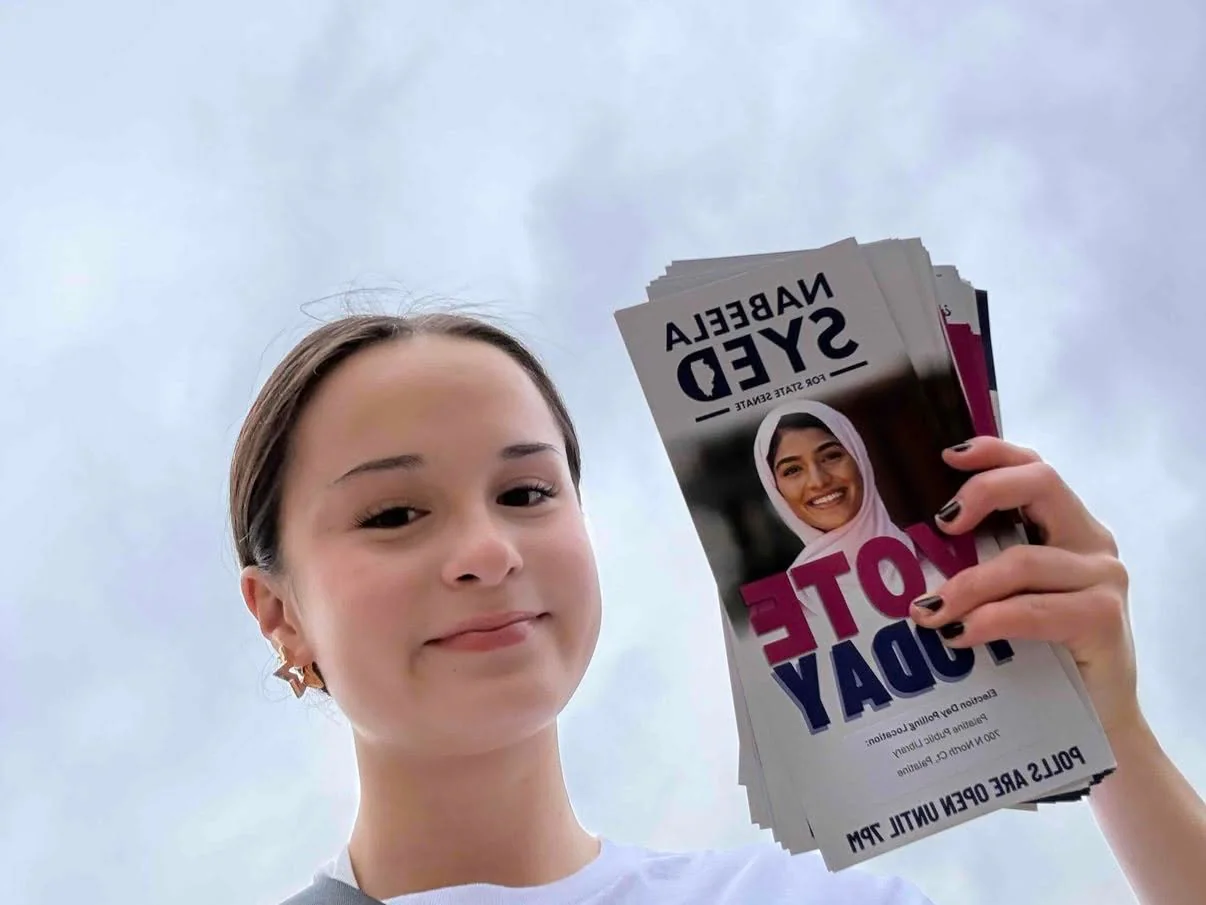
Identity remained part of the 2026 contest. Syed said she encountered hateful and intimidating remarks while canvassing and described the pressure of repeatedly having to defend her belonging in the district where she grew up. Hills, a former Cook County prosecutor appointed to the Senate seat, questioned Syed’s experience and campaigned on public safety, lower taxes and tighter government spending.
Immigration, data centers and household costs
The race also turned on policy disputes with implications beyond the district.
Immigration enforcement was one dividing line. Hills argued that Illinois’ TRUST Act should permit a limited exception for local cooperation with federal authorities in cases involving serious or violent offenses. Syed defended the state’s protections and argued that local police should not be assigned responsibility for enforcing federal civil immigration law. The candidates outlined those positions in responses to the Daily Herald before Election Day.
Data centers created another debate. Both candidates called for closer scrutiny of developments that can increase demand for electricity and water and affect nearby communities. Syed supported legislation addressing those costs and resource pressures. Hills called for at least a one-year moratorium on new data centers and stronger local control.
Their agreement that the issue required attention, combined with their disagreement over the remedy, reflected how a technology-sector investment can become a household concern when residents are focused on utility bills, water use, infrastructure and land development.
Affordability and health care access were also central to Syed’s campaign. Her House record provides a measure of the priorities she presented to voters. She was a lead House sponsor of legislation enacted in 2023 to address price gouging involving essential generic drugs.
A ticketing measure she sponsored became law in 2026 and requires sellers to display the full price, including assessed fees, when a ticket is first advertised. She also sponsored a mammogram-coverage measure that passed both chambers. Its amended language ties coverage to evidence-based clinical guidelines and a health care provider’s determination, rather than the specific age thresholds included in the original proposal.
Another Syed proposal, concerning prices set through the use of personal surveillance data, was sent back to a House rules committee in March. The distinctions matter: a bill introduced, a measure passed by both chambers and a law enacted are different stages of legislative achievement.

A $6.5 million contest
The campaign’s financial scale added another layer to the story. Reform for Illinois told WBEZ that Syed and Hills had raised approximately $6.5 million combined: at least $4.7 million for Syed and $1.8 million for Hills. Syed’s campaign received substantial backing from Democratic organizations and unions. An outside political committee formed to oppose her also received a $500,000 contribution.
Hills criticized the size and conduct of the Democratic campaign. The figures cited during the race are contribution totals reported at that point, not necessarily a final accounting of every dollar spent.
The financial imbalance does not diminish Syed’s victory, but it complicates the simplest version of an outsider-success story. By 2026, she was an incumbent House member seeking higher office with institutional support and a record voters could examine. Her campaign had to sell both personal connection at the doorstep and a governing agenda in Springfield.
For Muslim Americans and South Asian families, the result carries an unmistakable representational significance. Syed’s election at 23 showed that a young Muslim woman in a hijab could win a Republican-held suburban seat. Her Senate victory at 27 now gives her a larger platform—and a more demanding test.
The questions awaiting her are concrete: how Illinois should balance immigration enforcement with local policing, who should pay for infrastructure associated with data centers, and whether consumer and health care policies produce the savings and access their supporters promise. Her next measure of success will come not from the historic nature of the win, but from what she does with the seat.