
Every year, homes, temples and gurdwaras across South Asia and around the world are illuminated by oil lamps and candles. Families gather, prayers are offered, sweets are exchanged and communities continue traditions shaped by centuries of religious practice, migration and cultural change.
Diwali, also called Deepavali, is primarily a Hindu festival associated with light, renewal, prosperity and the triumph of good over evil. Bandi Chhor Divas is a Sikh commemoration of Guru Hargobind Sahib’s release from imprisonment and his insistence, according to Sikh tradition, that other prisoners be freed with him.
The overlap matters, but it should not erase the differences between the observances. Their shared season creates space for interfaith understanding precisely because each tradition retains its own theology, historical memory and practices.
For many people, the two occasions also raise a broader question: how should the symbolic language of light be reflected in the way people treat one another? Diwali and Bandi Chhor Divas offer different answers rooted in different histories, while both continue to speak about hope, moral responsibility and human dignity.
Diwali’s Many Sacred Histories
The word Diwali is commonly traced to Sanskrit terms associated with a row of lamps. The festival developed through the religious and cultural traditions of ancient India and cannot be reduced to one historical event or a single universal legend.
For many Hindus, Diwali represents the victory of righteousness over wrongdoing, knowledge over ignorance and hope over despair. Its religious meanings vary across regions and communities, reflecting the diversity of Hindu life rather than one uniform observance.
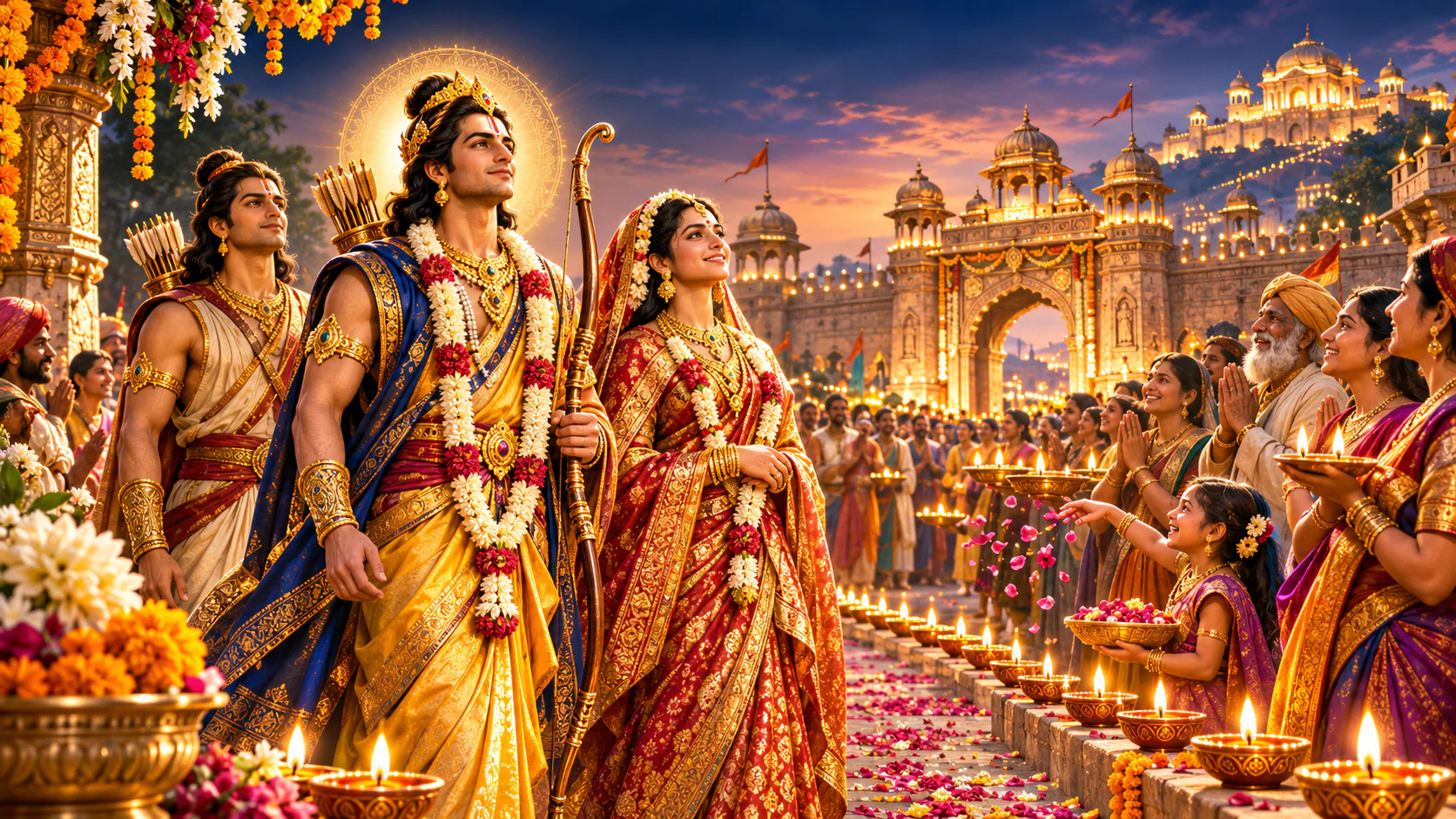
In northern India, one of the best-known traditions links the festival to the Ramayana. According to the sacred narrative, Lord Rama returned to Ayodhya with his wife, Sita, and his brother, Lakshmana, after 14 years of exile and after defeating Ravana, the ruler of Lanka. Popular tradition says the people of Ayodhya welcomed their return by lighting oil lamps across the city.
That account belongs to revered religious tradition; it is not presented here as an independently established historical event. Its continuing importance lies in the values it conveys, including loyalty, moral courage, restoration and the return of just rule.
In many parts of southern India, Diwali is associated with Lord Krishna’s defeat of Narakasura, a figure representing oppression and wrongdoing in Hindu sacred narratives. Elsewhere, the celebration places particular emphasis on Lakshmi, the goddess associated with prosperity, good fortune and abundance.
Families may clean and decorate their homes, offer prayers and light lamps as signs of welcome and spiritual renewal. The practices surrounding the festival can include gatherings, the exchange of sweets and other forms of family and community celebration. Yet Diwali is not simply a night of fireworks, shopping or social activity.
For millions of worshippers, it is a deeply spiritual occasion that encourages reflection, gratitude, generosity and renewed moral responsibility. The lamp can represent the overcoming of darkness, while the rituals of preparation and prayer provide an opportunity to consider how religious values should shape everyday conduct.
Diwali Beyond Hinduism
Although Diwali is principally a Hindu religious festival, the same season also carries important meanings for several other South Asian religious communities.
Jains commemorate the nirvana, or spiritual liberation, of Lord Mahavira, the 24th Tirthankara. Jain traditions emphasize freedom from the cycle of rebirth, nonviolence, self-discipline and spiritual enlightenment.
Some Buddhist communities observe related festivals or customs around the same period. These observances should not be treated as one celebration with a single shared origin. Each community maintains its own beliefs, history and practices.
Their coexistence demonstrates how the symbolism of light can carry different sacred meanings without dissolving religious identity. A common season may bring communities into contact, but it does not make their religious narratives interchangeable.
That distinction is important when Diwali is discussed in multicultural settings. Shared public celebrations can encourage familiarity and goodwill, while accurate understanding requires acknowledging that the festival’s significance is not identical for Hindus, Jains, Buddhists or other communities.
Bandi Chhor Divas and the Ethics of Shared Freedom
For Sikhs, the festival season carries a separate historical meaning through Bandi Chhor Divas, a name commonly translated as “Day of Liberation” or “Prisoners’ Release Day.” It commemorates the release of Guru Hargobind Sahib, the sixth Sikh Guru, from detention at Gwalior Fort under the Mughal emperor Jahangir in the early seventeenth century.
Guru Hargobind’s leadership followed the execution of his father, Guru Arjan Dev Ji, the fifth Sikh Guru, in 1606 under Mughal authority. Guru Hargobind developed the Sikh community’s emphasis on both spiritual and temporal responsibilities, commonly expressed through the principle of Miri-Piri.
He also established the Akal Takht at Amritsar, which became a major institution of Sikh temporal authority. His leadership emerged during a difficult period in Sikh history, and his imprisonment and release became important parts of Sikh collective memory.
Yet Bandi Chhor Divas is not remembered only because one religious leader regained his freedom. Its central moral force comes from the tradition that Guru Hargobind refused to leave other prisoners behind.
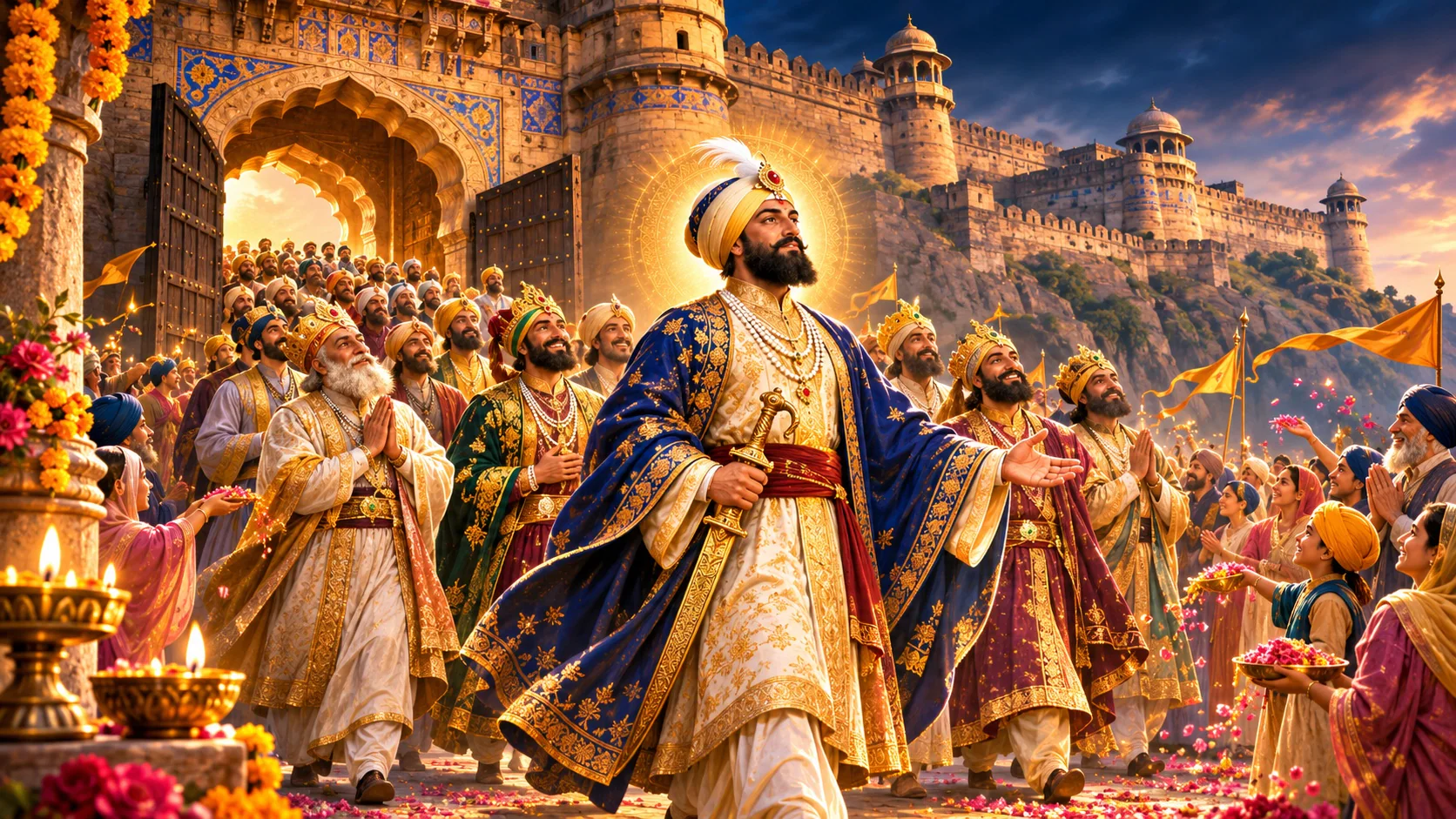
According to Sikh tradition, 52 princes or rulers were also being held at Gwalior Fort. When the Mughal emperor agreed to release the Guru, he stipulated that the other prisoners could leave only if they could hold on to the Guru’s robe as he departed.
Guru Hargobind is said to have commissioned a specially designed cloak with 52 tassels or extensions, allowing each prisoner to hold one. The group could therefore leave together, with the Guru’s release linked to the freedom of those who had been imprisoned alongside him.
The story made Guru Hargobind known as Bandi Chhor, the liberator of prisoners. It has endured as a symbol of compassion, ingenuity and solidarity. Its central ethical principle is clear within the commemoration: freedom is incomplete when it belongs to one person while others remain unjustly imprisoned.
The cloak and the precise details of the release are elements of Sikh historical tradition, and surviving sources do not establish every detail in the same way. Responsible historical reporting therefore distinguishes between the broad account recognized in Sikh history and details whose documentation or chronology is disputed.
The story also carries a message that reaches beyond religious boundaries. The prisoners are traditionally identified as Hindu rulers, while the figure securing their release was a Sikh spiritual leader. For many Sikhs, that detail reinforces the idea that justice cannot be limited by sectarian identity.
Bandi Chhor Divas consequently commemorates more than an individual’s escape from detention. It recalls a model of leadership in which personal freedom is connected to the welfare of others. Guru Hargobind’s example continues to inform discussions about justice, equality, human rights and the responsibilities of those who hold authority.
A Disputed Chronology and Amritsar’s Celebration
The broad account of Guru Hargobind’s detention and release is widely recognized in Sikh history, but the chronology differs among sources. The year 1619 is commonly given by organizations including the Sikh Coalition and the Royal Commission on the Ancient and Historical Monuments of Wales.
The Shiromani Gurdwara Parbandhak Committee’s biographical account, however, presents an earlier chronology. It places Guru Hargobind’s detention from approximately 1609 to 1612, with his release in 1612.
Those dates should not be presented as settled fact without attribution. The historical disagreement does not remove the religious significance of Bandi Chhor Divas, but it does require careful wording. The commemoration remains centered on Guru Hargobind’s liberation and his association with the freedom of 52 fellow prisoners.
Sikh tradition connects the Guru’s return to Amritsar with the Diwali season. Accounts describe the city welcoming him with lamps and public celebration. Sikhs had already gathered during the Diwali period before Guru Hargobind’s imprisonment, but the story of his liberation gave the occasion a particularly important place in Sikh historical memory.
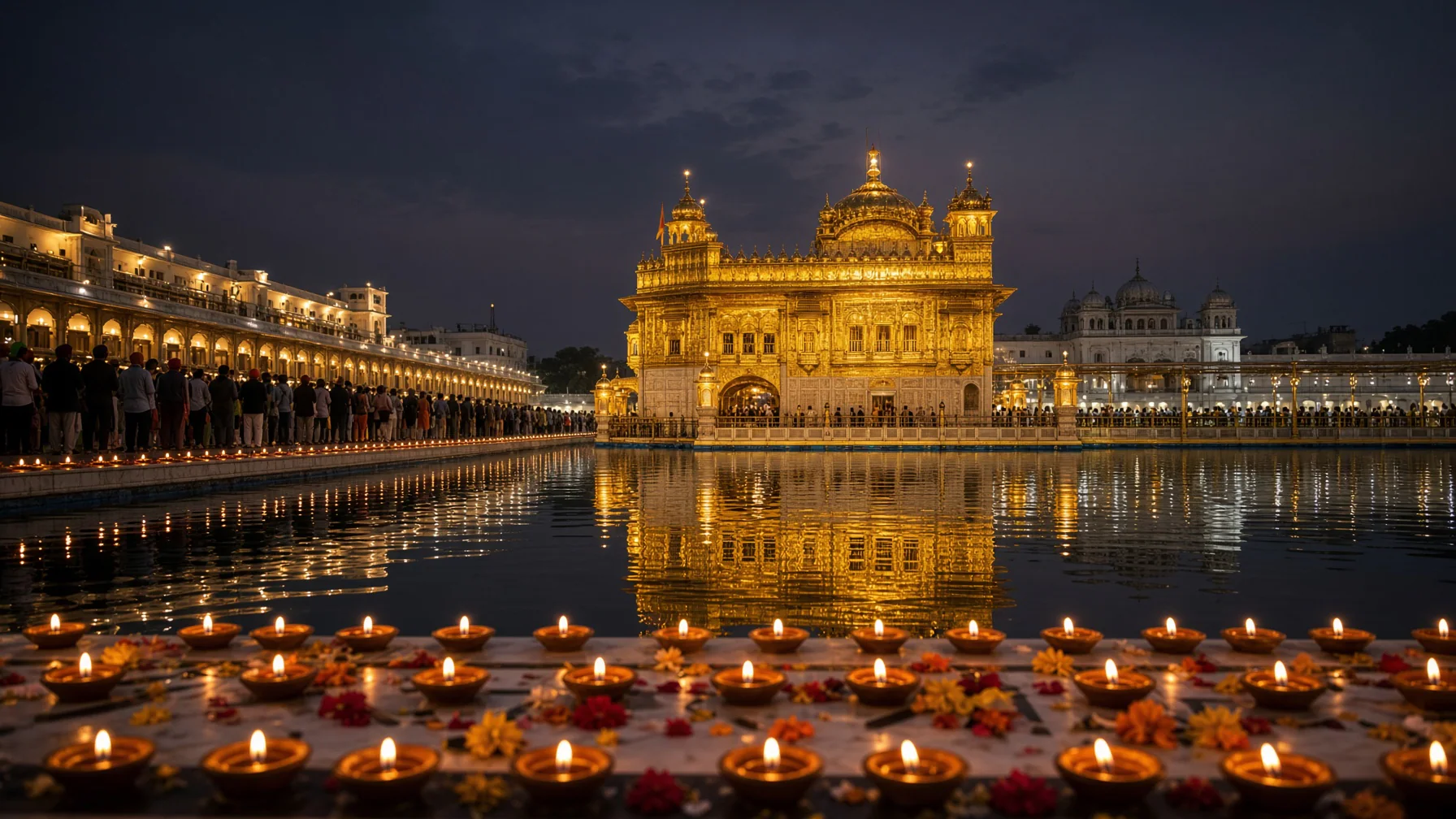
Over time, Amritsar became a major center of Bandi Chhor Divas observance. At Sri Harmandir Sahib, widely known as the Golden Temple, the complex is illuminated as worshippers gather for prayers, hymns and reflection. The lights mirrored in the surrounding sacred pool have become one of the most recognizable images associated with the occasion.
For Sikhs, the illumination recalls both the return of a revered Guru and the ideals of spiritual freedom, resistance to oppression and responsibility for the welfare of others. Although lamps and communal gatherings overlap with Diwali practice, Bandi Chhor Divas retains its distinct Sikh meaning.
Two Traditions, a Shared Human Concern
Diwali draws on ancient Hindu sacred traditions involving righteousness, renewal, prosperity and the victory of good over evil. Bandi Chhor Divas remembers an episode from Sikh history centered on imprisonment, liberation and the welfare of others.
Recognizing that distinction is essential to respecting both faiths. The two occasions should not be described as one festival or treated as though their histories were interchangeable. Their shared date and overlapping public imagery do not erase the separate beliefs and memories that give each observance meaning.
At the same time, the values associated with the two occasions can create a meaningful point of connection. The Diwali lamp may be understood as a reminder that goodness and knowledge should overcome darkness and ignorance. The story of Bandi Chhor Divas asks what it means to carry that light into public life through concrete action.
It turns freedom from a private possession into a shared responsibility. A person may celebrate goodness through prayer, but the story of Guru Hargobind also invites people to consider whether they are prepared to defend the dignity and freedom of others.
That connection is especially relevant in an era shaped by religious prejudice, political polarization and social division. Prayer, celebration and family tradition matter, but both observances also invite people to consider how their values are reflected in their treatment of others.
The ethical ideas associated with the two traditions offer an opportunity for mutual understanding without requiring either community to surrender its distinct identity. Diwali speaks through sacred stories and practices of renewal and light; Bandi Chhor Divas speaks through a historical memory of liberation linked to compassion and solidarity.
A Living Heritage Beyond South Asia
Diwali and Bandi Chhor Divas are now observed far beyond the regions where their traditions developed. Hindu, Sikh and other South Asian diaspora communities across the United States, Canada, the United Kingdom, Australia and elsewhere organize religious services, cultural programs, educational events and family gatherings.
For immigrants and their descendants, these occasions help sustain religious identity and maintain connections with ancestral traditions. They also give neighbors opportunities to learn about histories that may be unfamiliar to them.
In multicultural societies, public celebrations can support interfaith friendship without requiring communities to surrender the beliefs that make their traditions distinct. Hindus, Sikhs, Jains, Muslims, Christians, Buddhists and people of other faiths can extend goodwill while respecting the separate religious meanings of the season.
The same approach applies to public language. It is possible to acknowledge the shared imagery of lamps and celebration while explaining that Diwali and Bandi Chhor Divas do not have the same origin, theology or historical purpose.
Festivals survive not merely because people preserve rituals, but because the ideas behind them continue to speak to new generations. The lamps of Diwali recall teachings about spiritual renewal and the triumph of light. The story of Bandi Chhor Divas recalls a leader who, according to Sikh tradition, refused to accept freedom for himself alone.
One tradition celebrates light overcoming darkness. The other commemorates the responsibility to help bring others out of captivity. Together, they offer a demanding measure of public morality: light has meaning when it reaches those in need, and freedom is most powerful when it is shared.
A world illuminated by millions of lamps is a beautiful sight. A world illuminated by justice, compassion, equality and respect for human dignity would be an even greater achievement.
As Diwali and Bandi Chhor Divas are observed in 2026, their distinct histories remain worth learning and respecting. Their shared season offers a lasting message: light is most meaningful when it brings hope to others, and freedom is most powerful when it is shared.