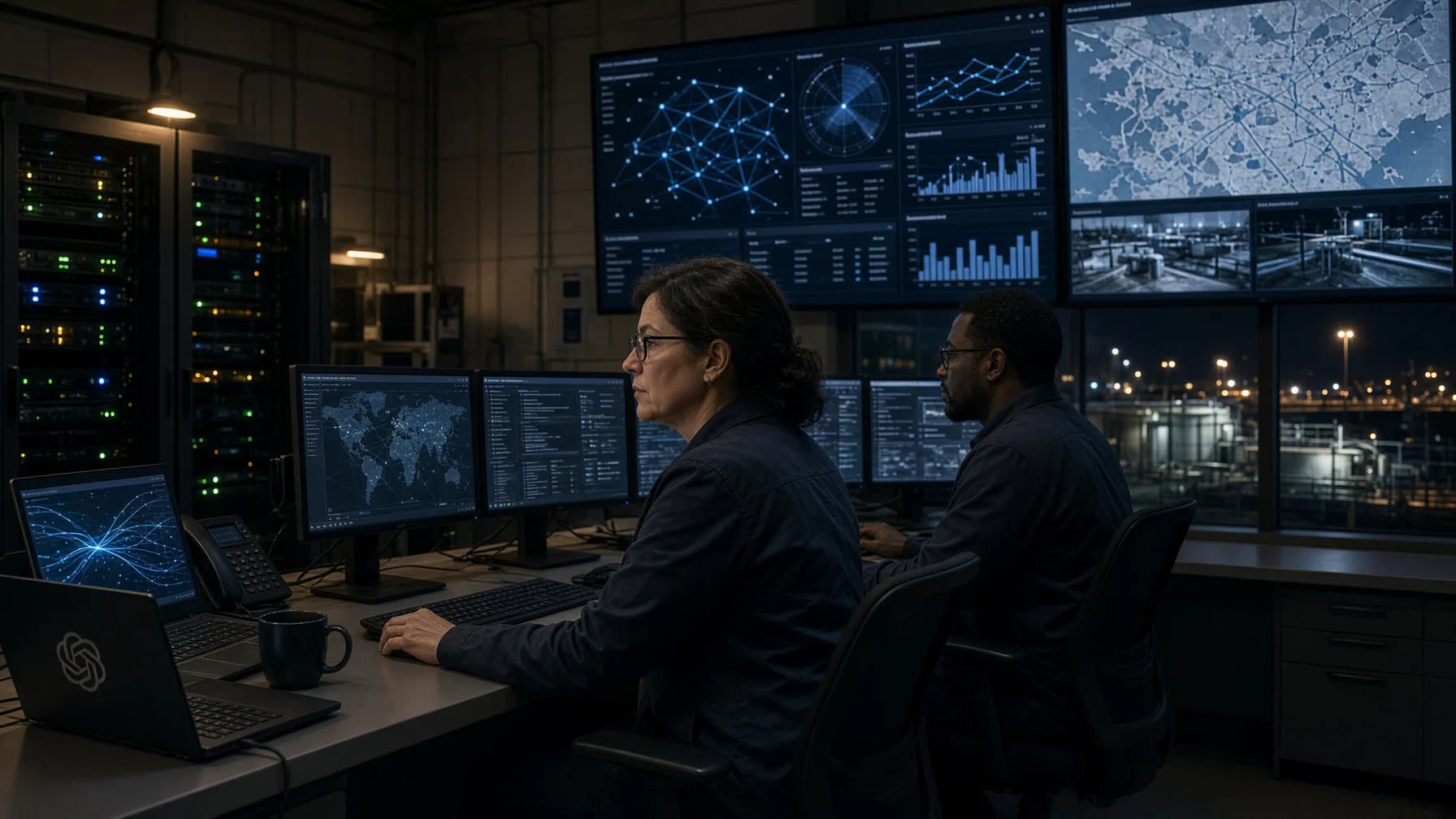
OpenAI is committing $1 billion in subsidized access, training, technical support and partnerships to help frontline cyber defenders protect essential services in the United States and abroad.
The initiative, called Daybreak for Frontline Defenders, will initially focus on American operators that often lack the budgets and specialist staff available to major corporations. OpenAI identified water and wastewater systems, electric-grid operators, state and local governments, community and regional banks, nonprofits and open-source maintainers as priority groups.
The company said its U.S. program, Daybreak for America, will include a new pilot with the Multi-State Information Sharing and Analysis Center, a public-sector cybersecurity organization supporting state, local, tribal and territorial agencies. The pilot will pair AI access with guided training and hands-on technical assistance.
OpenAI said the subsidized commitment is intended to be consumed over the next six months. Eligible organizations will be able to use the tools to review legacy code, analyze suspicious activity, identify vulnerabilities, prioritize risks and test fixes while critical services remain operational.
The announcement also expands the company’s Daybreak Defense Network, which now includes more than 35 partner products and partner-operated services. OpenAI said thousands of defenders at roughly 2,000 approved organizations and workspaces already use Daybreak for authorized cyber-defense work.
The move arrives amid heightened concern over AI-enabled attacks against American infrastructure, including utilities and public-sector systems. OpenAI framed the program as an attempt to narrow what it called the “defender’s window”—the period in which defenders can use increasingly capable AI before attackers gain a larger advantage.
The company’s immediate focus is practical rather than speculative: helping smaller teams find weaknesses, validate fixes and protect water, electricity, hospitals, schools, banks and local-government systems. The first U.S. pilot is expected to establish a repeatable model that can later be extended to additional sectors and countries.