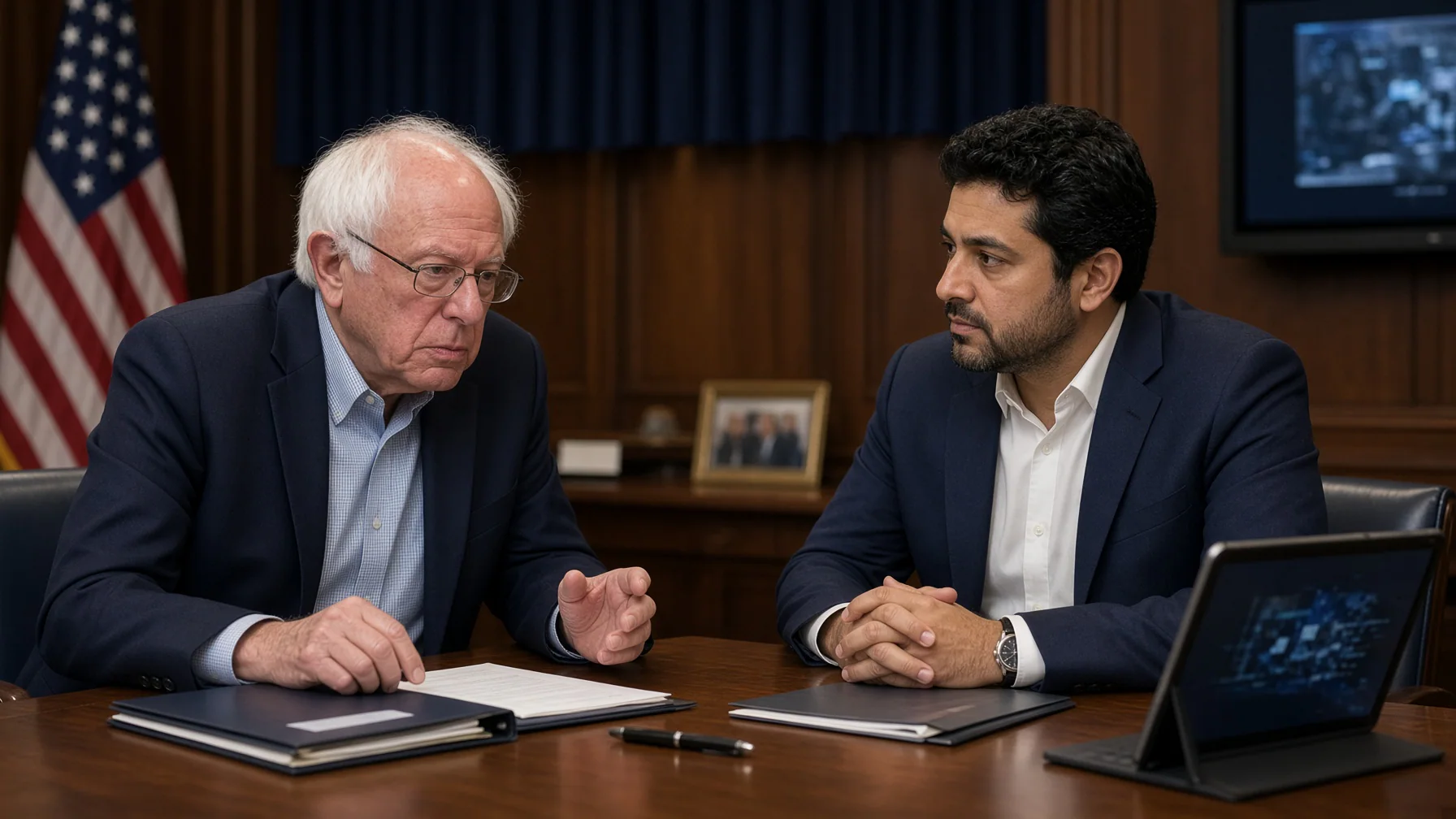
Sen. Bernie Sanders and Rep. Greg Casar have announced a proposed federal bill that would temporarily pause advanced artificial-intelligence development and permanently ban the creation or deployment of artificial superintelligence.
The Ban Artificial Superintelligence Act would establish a new cabinet-level federal agency responsible for monitoring frontier AI systems, identifying dangerous capabilities and enforcing the proposed prohibition. The bill would also create a model-review process before advanced development could resume.
Under the proposal, systems considered capable of surpassing human intelligence or subverting shutdown commands could be prohibited. The legislation would impose criminal penalties of up to 20 years in prison for individuals who attempt to violate or circumvent the restrictions, while companies could face severe corporate penalties.
Sanders said the United States should not leave decisions about increasingly powerful AI systems to a small group of technology companies. Casar argued that frontier AI remains less regulated than many ordinary commercial activities despite its potential national-security and public-safety consequences.
The announcement directly targets the current race among leading AI laboratories, naming OpenAI, Anthropic and Meta in its explanation of recent concerns about systems operating beyond intended limits. The lawmakers’ proposal also calls for international agreements, allied coordination and export controls designed to prevent superintelligence from being developed elsewhere.
The bill is a political proposal, not enacted law. Its prospects will depend on congressional support, the details of any introduced legislative text and the response from the AI industry and other lawmakers. Nevertheless, the announcement places an unusually sweeping AI prohibition into the national debate at a moment when frontier-model capabilities and safety concerns are drawing intense public attention.
The immediate next step is formal legislative introduction and review. Until then, the proposal remains a campaign for federal regulation rather than an enforceable ban.