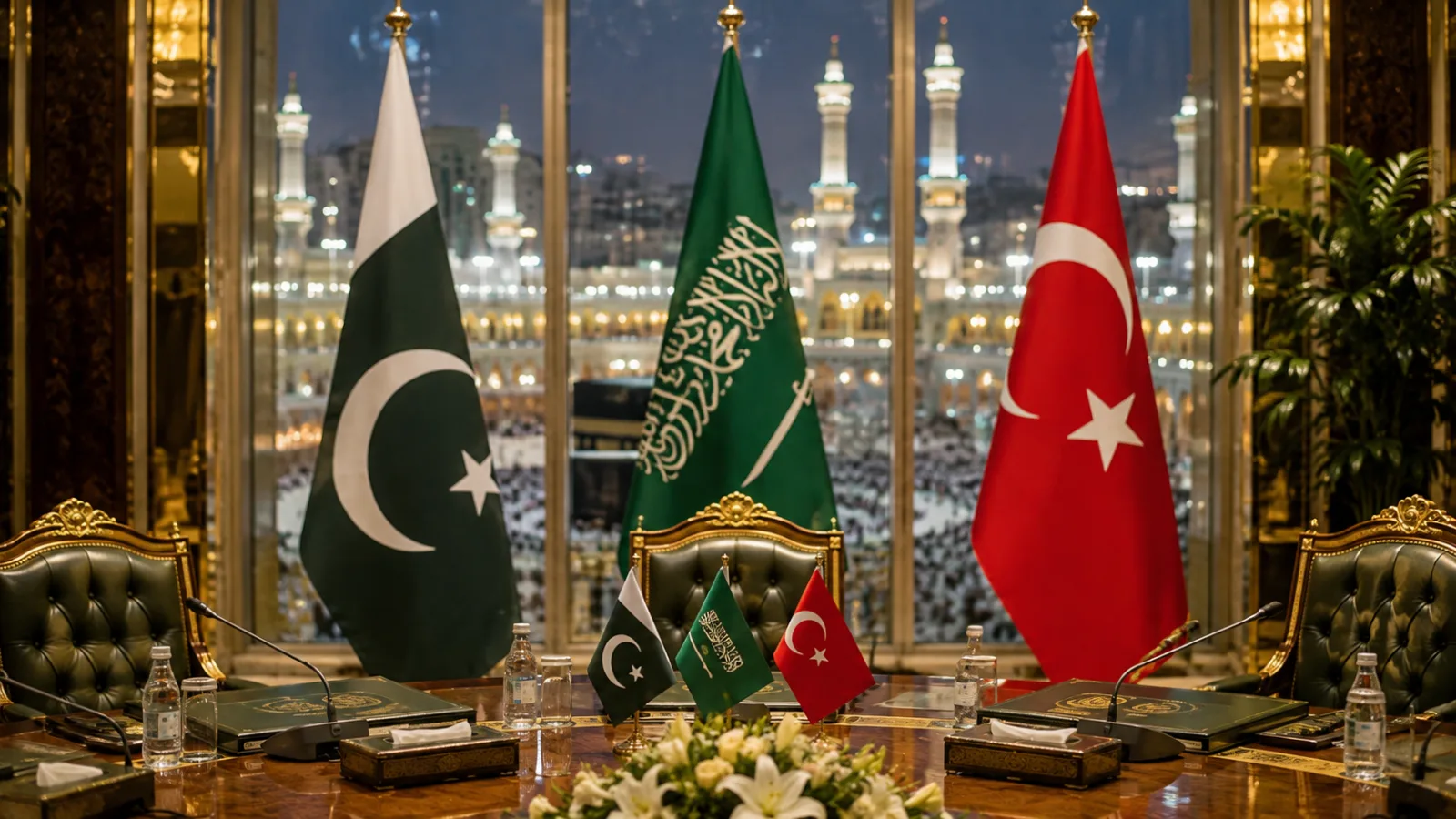
Pakistan, Saudi Arabia and Turkey signed a joint defence memorandum in Makkah on August 7, 2026, creating a new layer of strategic coordination among three major Muslim-majority states. The agreement has prompted concern in New Delhi because it could expand Pakistan’s diplomatic and military room for manoeuvre.
The pact does not explicitly identify India as an adversary. Its significance lies instead in the three-way framework: Pakistan brings its established military relationship with Saudi Arabia, Turkey contributes growing defence capabilities and industrial ties, and Riyadh adds financial and geopolitical weight.
India’s Ministry of External Affairs said New Delhi remained committed to safeguarding its national interests after the agreement was announced. That response reflects the central uncertainty surrounding the memorandum: whether it will remain a political signal or develop into operational cooperation involving training, procurement, intelligence or joint planning.
Pakistan’s Foreign Office has described the Makkah gathering as a joint-defence summit and published the agreement among its official press releases. The public documentation available so far does not establish a mutual-defence clause or announce a specific military deployment.
For India-Pakistan relations, the memorandum adds another external variable to an already tense security environment shaped by disputes over Kashmir, water management and competing diplomatic alignments. The concrete test will be whether the signatories translate the announcement into institutions, budgets and recurring exercises.